ACCESS NETWORKS
Passive Optical Access Networks - Capacity Enhancement
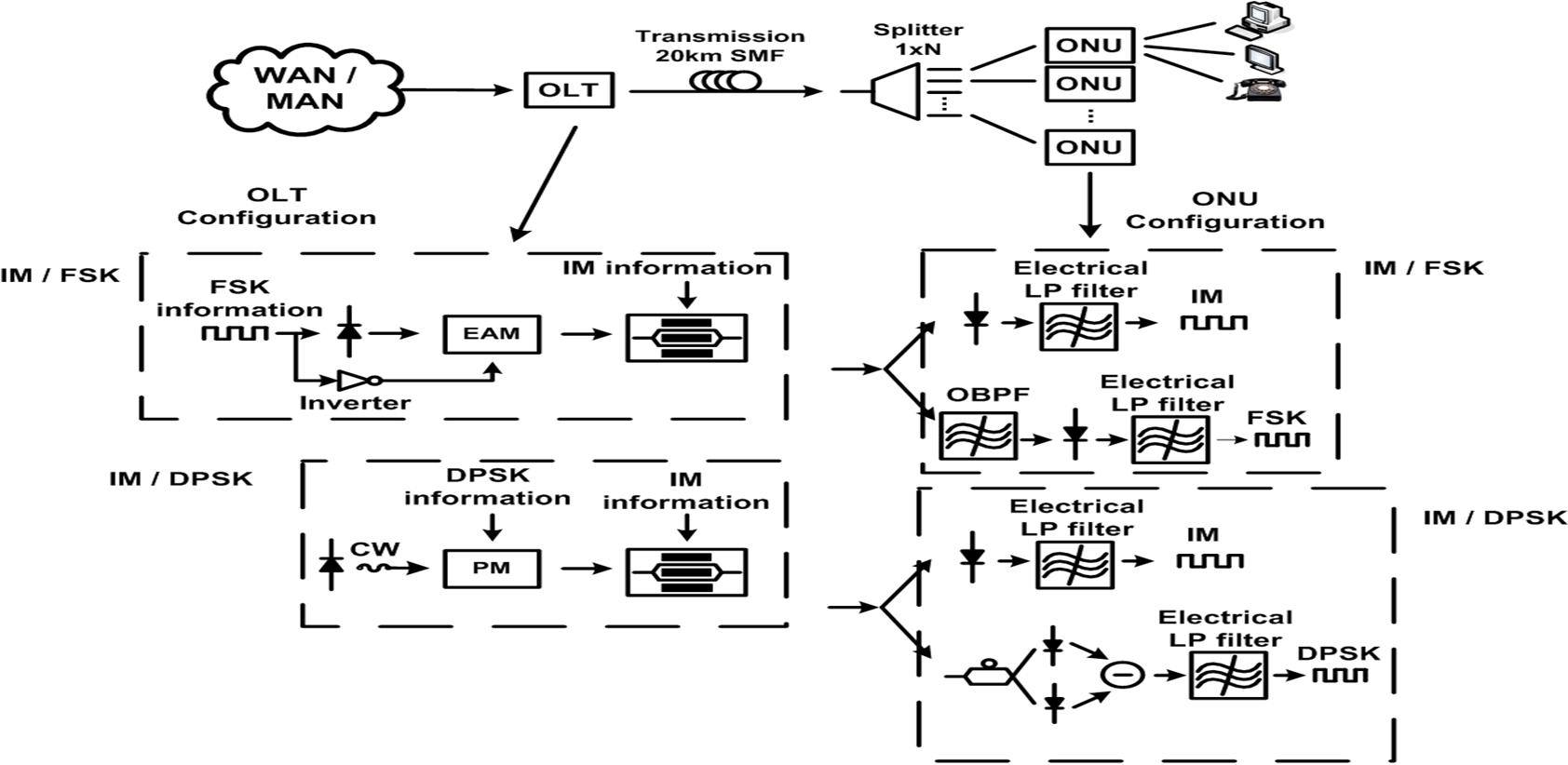
Our group has recently proposed an optical transmitter architecture for the realization of Passive Optical Networks, based on the use of orthogonal modulation formats. As it has been shown this technique offers an additional downstream channel to an optical access network without increasing the cost and the complexity of its implementation. The results derived by numerical simulations show that the combination of the orthogonal bit streams can stand for several network's bit rate requirements, providing the ability to support new, high demanded, broadband technologies as well as rapid increment of the optical access network subscriber's number. Moreover the proposed architecture exhibits better bandwidth utilization, more efficient use of network resources and cost effectiveness compared with the so far proposed techniques (WDM, SCM, etc.)
All-optical label swapping
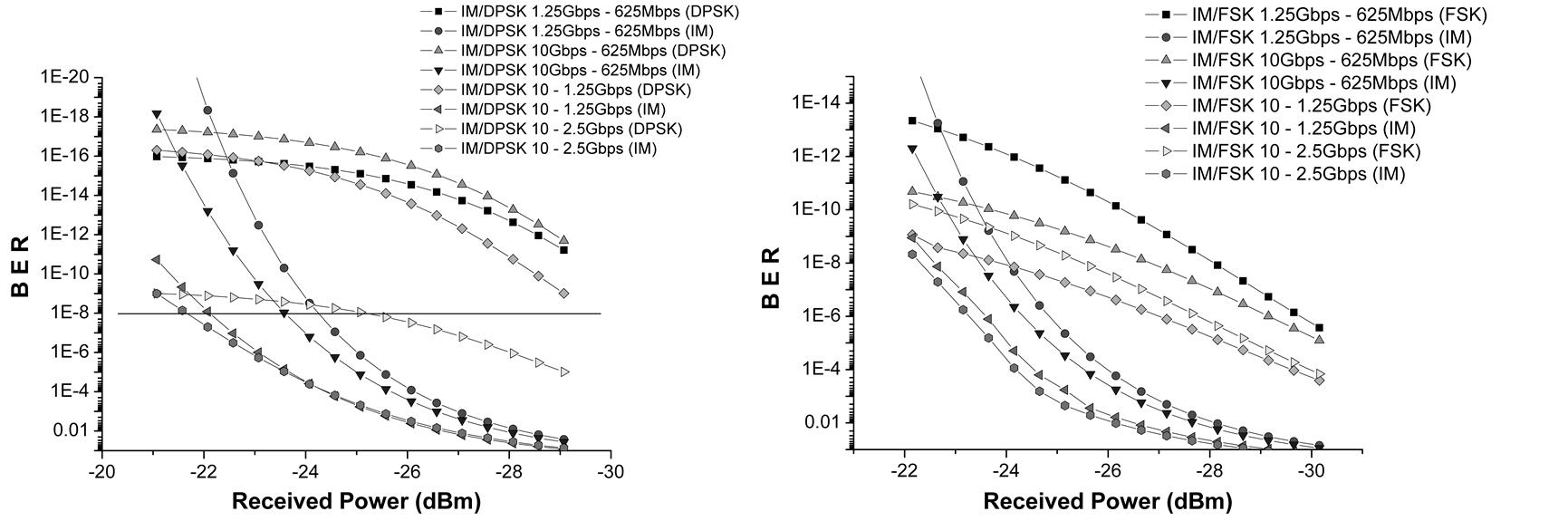
All optical label swapping has emerged as one of the most promising techniques concerning future networks and their operations. A new approach on optical label encoding for the realization of the all optical label swapping in transparent optical packet switched networks was proposed and studied by our laboratory. The proposed method is based on the combination of Optical Frequency Shift Keying (OFSK) modulated label with the On Off Keying (OOK) modulated payload on the same optical carrier. The aforementioned method, tested via numerical simulations, exhibits the following advantages compared with the so far proposed schemes. At first, because of the fact that the two signals are encoded on the same optical carrier, the proposed method does not need synchronization. Moreover, beside the fact that the method is operated with two orthogonal bitstreams, its realization is very simple concerning the transmitter as well as the receiver and any intermediate node. Finally the proposed method, by incorporating two bitstreams on the same optical carrier, exhibits efficient use of bandwidth resources and therefore, is adequate for WDM communication systems.
All optical label swapping has emerged as one of the most promising techniques concerning future networks and their operations. A new approach on optical label encoding for the realization of the all optical label swapping in transparent optical packet switched networks was proposed and studied by our laboratory. The proposed method is based on the combination of Optical Frequency Shift Keying (OFSK) modulated label with the On Off Keying (OOK) modulated payload on the same optical carrier. The aforementioned method, tested via numerical simulations, exhibits the following advantages compared with the so far proposed schemes. At first, because of the fact that the two signals are encoded on the same optical carrier, the proposed method does not need synchronization. Moreover, beside the fact that the method is operated with two orthogonal bitstreams, its realization is very simple concerning the transmitter as well as the receiver and any intermediate node. Finally the proposed method, by incorporating two bitstreams on the same optical carrier, exhibits efficient use of bandwidth resources and therefore, is adequate for WDM communication systems.
The bitrates examined so far were 10 and 40 Gbps for the payload information and 625Mbps, 1.25 and 2.5 Gbps for the label one. The performance of the system has proved to be adequately good even after 250 km of end to end transmission including intermediate nodes.
 Active rings as potential devices in access networks
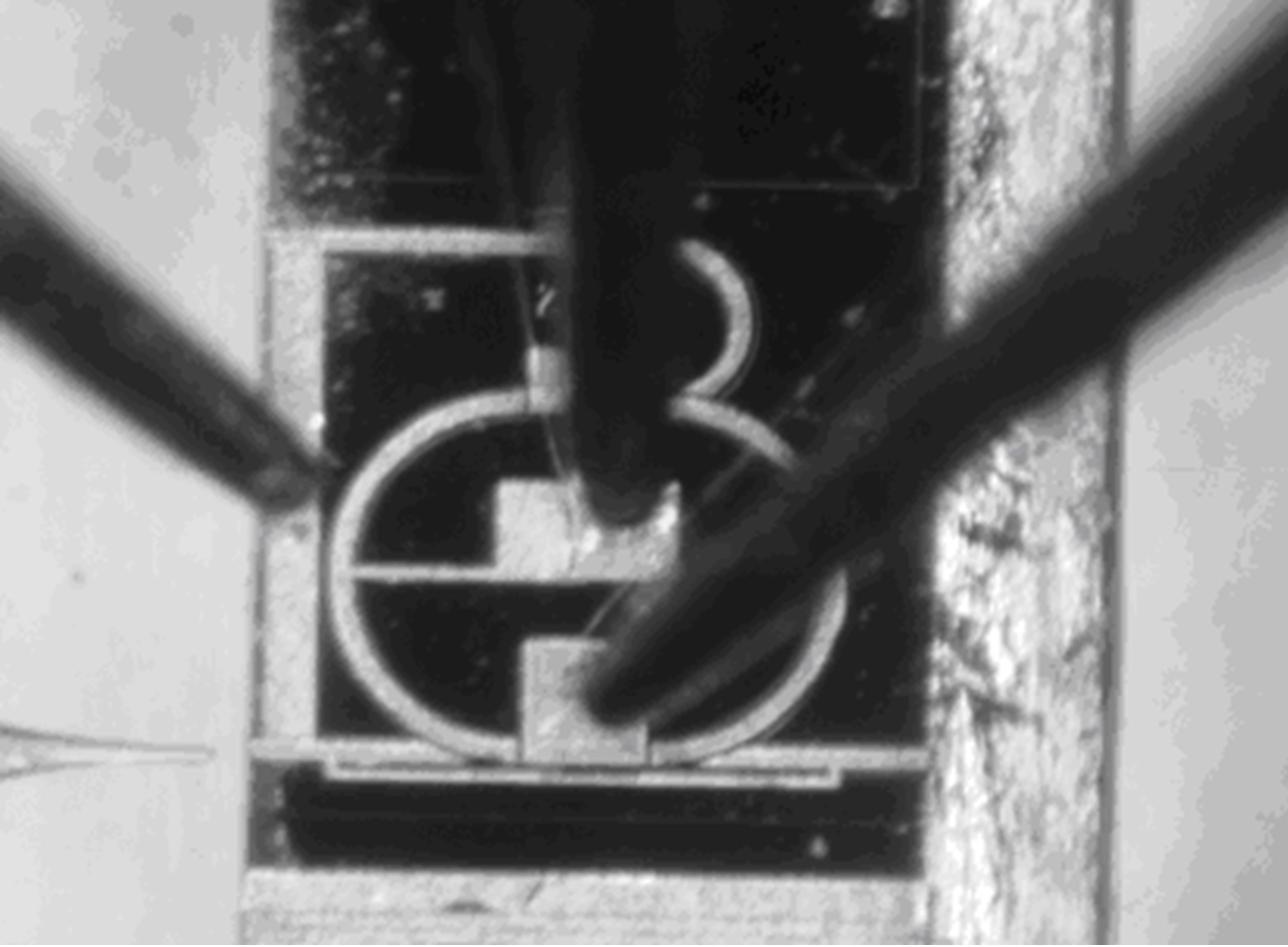
Active microring devices can operate as laser sources in future WDM networks and have shown to be quite promising components for all-optical signal processing applications. The lack of need for cleaved facets as well as their simple fabrication process makes them suitable for dense photonics integration. The photonics lab has been conducting experiments with active and passive microring components mainly within the scope of the European project WAPITI. Our group is involved in waveguide designing aspects of such devices, static and dynamic performance simulation and in their experimental characterization. Active and passive microrings, as well as active-passive integrated ones have been measured and along with the theoretical support by analytical models have produced results already published.
Tunability of all-active microrings
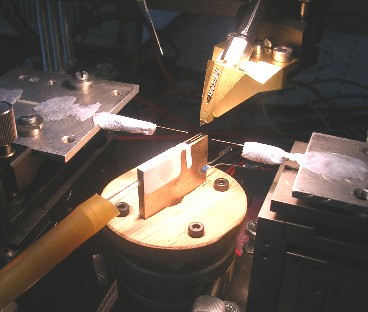 All-active microrings consist of active waveguide materials for all sections including the ring, bus waveguide and couplers. Separate electrical contacts allow for independent control of the different sections increasing this way their volatility. Most devices are cleaved from the wafer and have been anti-reflection (AR) coated with and intended residual reflectivity in the order of 10-3. The devices were fabricated in InGaAsP/InP materials at HHI Germany.
This residual reflectivity can control the spectral characteristics of
the ring laser by interfering with the modes of the ring cavity through
phase shifted feedback. Proper handling of the injection current is responsible
for adjusting the bus waveguides' refractive index and subsequently select
different wavelengths of the laser. The tunability of such microrings was
measured and tunability maps were produced showing ranges from 18 to 30
nm depending on the device. The principle of operation has been verified
by a multimode model, based on the rate equation approximation developed
by the group as well. The radii of the different rings used in measurements
varied from 130ìm to 540ìm.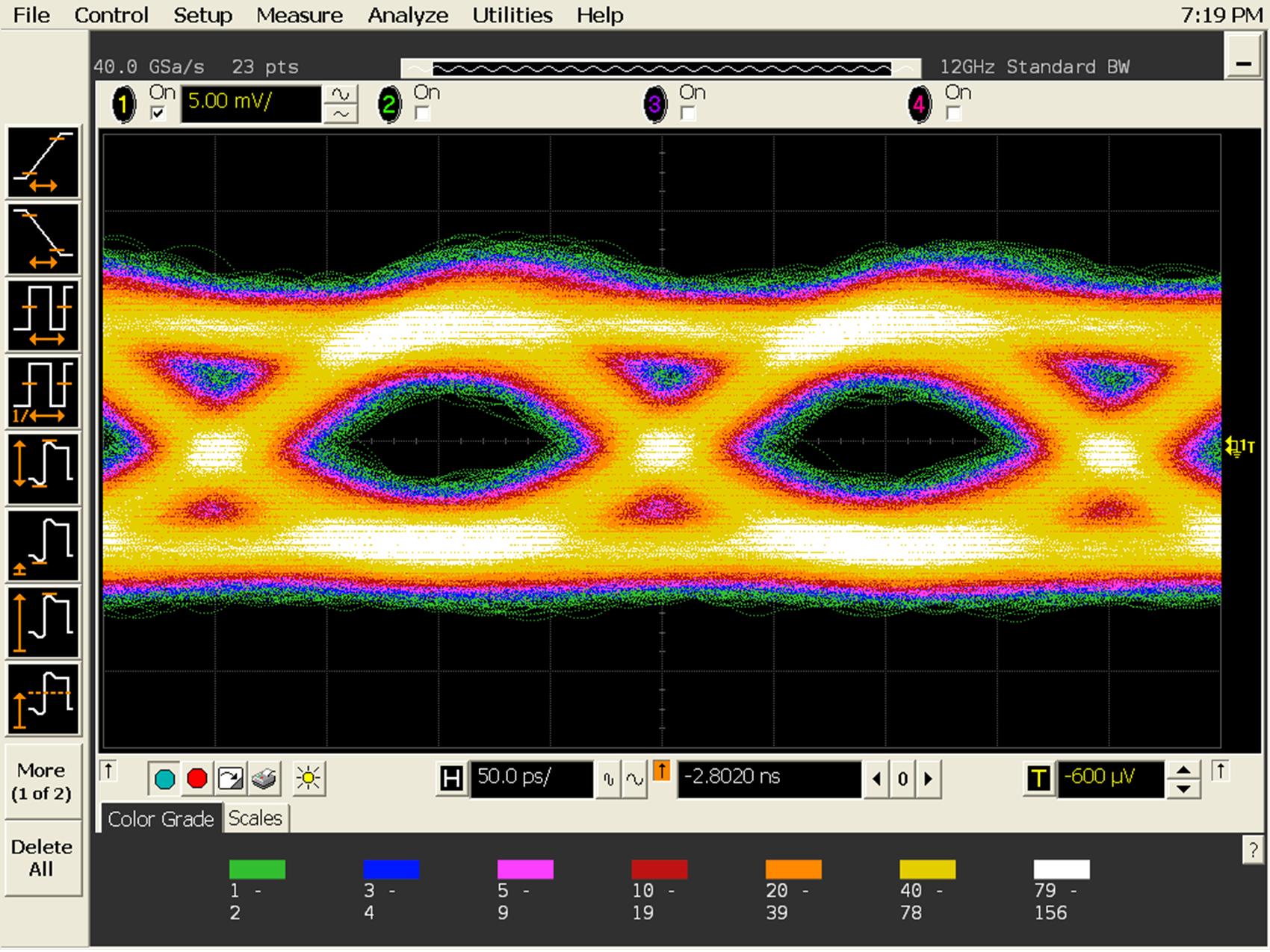
Active-Passive Integrated Microring Lasers
The active-passive integration technology developed within the scope of
the WAPITI project produced interesting devices that include active ring
cavities, vertically coupled with passive bus waveguides through a wafer
bonding process. These devices are currently under thorough investigation
and are showing very attractive characteristics. Apart from the static
performance which shows single longitudinal behavior for a broad range
of injection current values, especially for compact rings (e.g. radius
50ìm), the devices are also tested under modulation. Up to now, modulation
rates up to 7Gb/s have been recorded corresponding in error free (BER<10-12)
for back to back measurements.
Passive Microring based Add / Drop Filters
During the past years a considerable effort has been put into the realization of all optical network components using microring resonators. Their small size, the capability of integration, and the low manufacturing cost, make integrated micro rings a practical solution for near future optical networks.
Several applications of microrings have been already proposed and include filters, add/drop multiplexers, all optical gates, wavelength converters and sensors.In particular optical filters based on passive microrings has been in the spotlight of attention and our main effort is focused on analytical investigation of microring filters, and a complete evaluation of their performance under conditions similar to those of a real network. A travelling wave model has been developed in order to simulate the dynamic behaviour of the filter. The use of a numerical model instead of analytical equations allows the use of time dependant signals and the investigation of the simultaneous add and drop process of a filter. Moreover we investigate the MR's performance in the presence of noise, induced by EDFA, and spectral mismatches of the input signals. We have investigated the intra and inter band crosstalk under dynamic operation, and accordingly adjusted the rings manufacturing parameters (linear losses, ring radii, and coupling coefficient) so as to achieve bit rates up to 40Gbps. Finally by adjusting the model we have studied and simulate a variety of MR based filters, with high order rings and multi stage filters.
MMF Access Networks
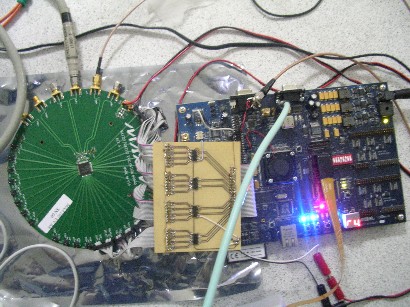 Multi Mode Fibers (MMFs) seem to be great candidates for future high bandwidth short area networks. They offer great advantages, such as higher misalignment tolerance, easier handling and the ability to be combined with lower cost transmitters and receivers. All of these make them a cost effective solution, especially when compared to their Single Mode (SMFs) counterparts. However, the main drawback employing MMFs is the limited performance in terms of the supported (bit rate)x(distance) product that originates from modal dispersion.
Electronic equalization techniques seem to be the most promising solution for enhancement of a MMF link performance. This technology has been widely used in wired networks, such as DSL technology and its variants, but has not been adopted in optical fiber networks yet. We have developed electronic equalizers in the form of Finite Impulse Response (FIR) Filters, hosted in a Field Programmable Gate Array (FPGA) device. 4 Feed Forward Equalizers (FFE) with different properties (1st: 4 taps using training bits for channel estimation, 2nd: as first with 8 taps, 3rd: 4 taps using blind channel estimation and 4th: as third with 8 taps) have been simultaneously implemented, in order to be able to perform comparative tests. All of them are fully adaptive using a variant of the Least Mean Square (LMS) algorithm. The weights are being calculated and updated on the fly providing adaptation to channel changes in the time domain.