ULTRA BROADBAND PHOTONIC SYSTEMS
Our group has published numerous results on a number of applications such as amplification, wavelength conversion, all-optical regeneration, optical switching utilizing four-wave mixing, parametric amplification and cross-phase modulation in all-optical fibers. The ultra-fast bitrate operation of the aforementioned functionalities relies on the almost immediate response of the underlying mechanism of Kerr effect in optical fibers. The activities on the aforementioned applications are divided in the following categories.
1. Parametric amplification and wavelength conversion
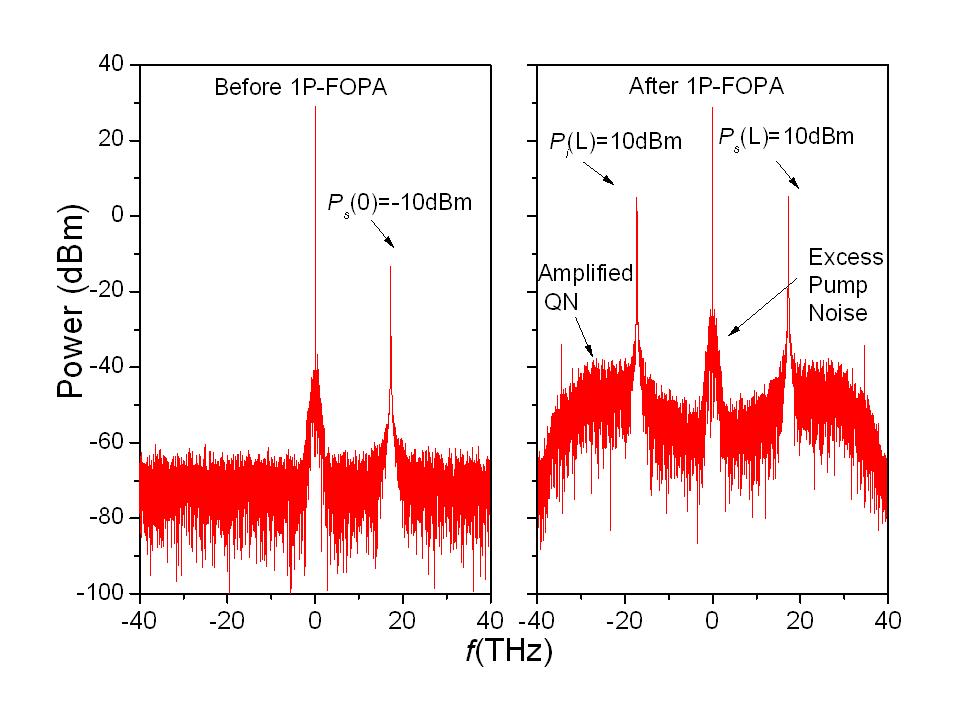
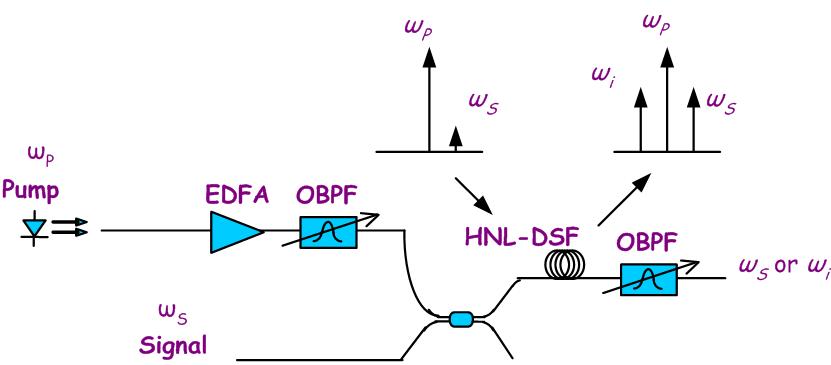 Parametric amplifiers have attracted the interest of scientific community because of their performance characteristics and versatility. In principle, a strong pump wave and a weak input signal are launched into an optical fiber at the frequencies ùp and ùs respectively which are close to the zero-dispersion point and through the propagation of the two input waves along the optical fiber a new wave called idler will be generated at the frequency ùi=2ùp-ùs carrying the amplitude and phase characteristics of the input signal. In that way, the data either loaded on the amplitude or on the phase of the input signal can be transferred to a new frequency, thus providing the wavelength conversion functionality which is of high importance in the wavelength routing approaches of the next generation networks. Exploiting the fiber non-linearity and utilizing powerful pump waves, the conversion efficiency defined as n=Pi,out/Ps,in where Pi,out is the idler power at the output of the amplifier and Pi,in the input signal power, can be highly enhanced and the input signal can be amplified as well. As long as the input signal is amplified, the device operates as a parametric amplifier. It is worth mentioning that more than 150 journal papers are focused on parametric devices, most of which were written since 2003! Our group contributed on the investigation of noise properties of parametric wavelength converters and amplifiers for single- and dual-pump schemes providing an accurate theoretical model for the determination of the device noise figure. The theoretical model takes into account the quantum noise limitations, the dispersion fluctuations and the output signal power variations caused by the pump wave noise. The model results have been numerically reproduced by our group and experimentally verified by other groups.
2. All-optical processing functionalities
2.1 All-optical regeneration
2.2.1 Intensity modulated signals
 All-optical signal regeneration is critical for future very high bit rate
optical networks as it allows the reduction of transmission impairments
such as noise accumulation, jitter and dispersion. Our group has theoretically,
numerically and experimentally demonstrated all-optical regeneration in
single-channel operation for high-speed signals either applying the data
on the pump wave or exploiting pump depletion effect in four-wave mixing
in highly nonlinear fibers. In the former technique, the regenerated output
is the idler (or conjugate) wave generated through the four-wave mixing
process. In the normal dispersion regime and for specific pump-signal wavelength
arrangement, the converted signal power saturates at high pump power values,
providing noise suppression at marks. The regenerative characteristics
are more evident when two FWM modules are utilized, where the wavelength
of the final regenerated output coincides to that of the input signal,
in case that wavelength conversion is not preferred.
All-optical signal regeneration is critical for future very high bit rate
optical networks as it allows the reduction of transmission impairments
such as noise accumulation, jitter and dispersion. Our group has theoretically,
numerically and experimentally demonstrated all-optical regeneration in
single-channel operation for high-speed signals either applying the data
on the pump wave or exploiting pump depletion effect in four-wave mixing
in highly nonlinear fibers. In the former technique, the regenerated output
is the idler (or conjugate) wave generated through the four-wave mixing
process. In the normal dispersion regime and for specific pump-signal wavelength
arrangement, the converted signal power saturates at high pump power values,
providing noise suppression at marks. The regenerative characteristics
are more evident when two FWM modules are utilized, where the wavelength
of the final regenerated output coincides to that of the input signal,
in case that wavelength conversion is not preferred.
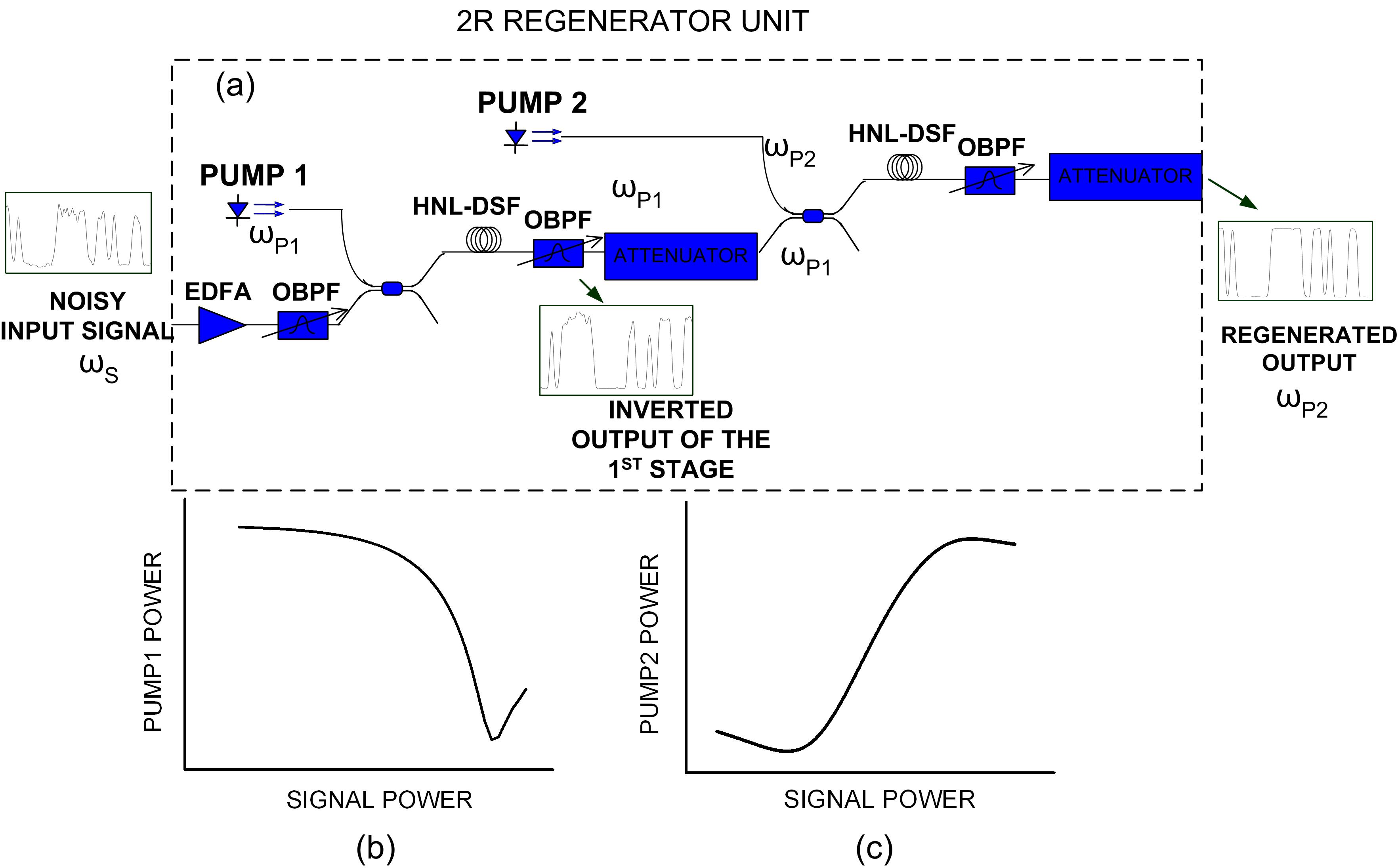 The second approach relies on the parametric process in the depleted-pump regime. In the depleted-pump regime, a high-power intensity modulated signal depletes the continuous wave pump in such a manner that the latter becomes intensity modulated and inverted compared to the signal. A cascade of two such devices that are working under strong pump-depletion has the potential to provide a non-inverted, either wavelength converted or not, amplitude modulated output, which exhibits regenerative characteristics with respect to the input signal. The cascadability analysis reveals the ability of the proposed regenerator to operate efficiently for both return and non-return to zero intensity modulated signals. The proposed reshaping technique is numerically compared to other schemes based on parametric amplification in fibers that have been reported in the literature. The numerical analysis shows the potential of the proposed scheme to compete and even outperform the other parametric regenerators.
Both approaches provide regenerated signals for bit-rates higher than 40Gb/s
and can be combined with wavelength conversion at intermediate network
nodes.
2.1.2 Phase modulated signals
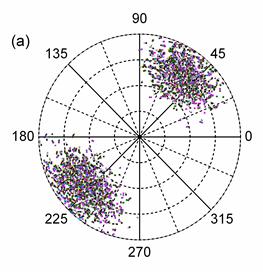
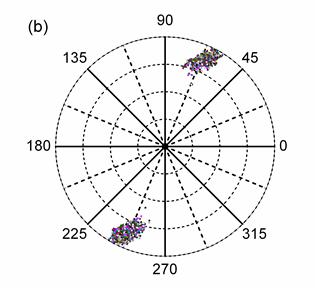
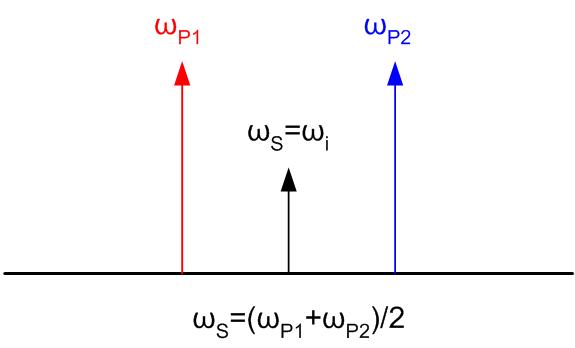 During the last decade, differential phase-shift keying (DPSK) has attracted the interest of numerous groups on one hand due to the 3dB receiver sensitivity enhancement compared to the on-off (OOK) approach and on the other hand thanks to the high tolerance to nonlinear effects. Therefore, the scientific interest is focused on schemes that offer DPSK signal regeneration. Our group numerically demonstrated all-optical amplitude and phase regeneration in a phase-sensitive parametric amplifier based on degenerate FWM in highly non-linear fiber for 40Gb/s RZ-DPSK signals. The phase-sensitivity is achieved by placing the pumps at frequencies that provide a non-frequency shifted image of the signal. The theoretical and numerical analyses show that almost ideal phase regeneration can be provided. The phase regeneration can be combined with power reshaping in the depleted-pump regime.
2.2 All-optical gates
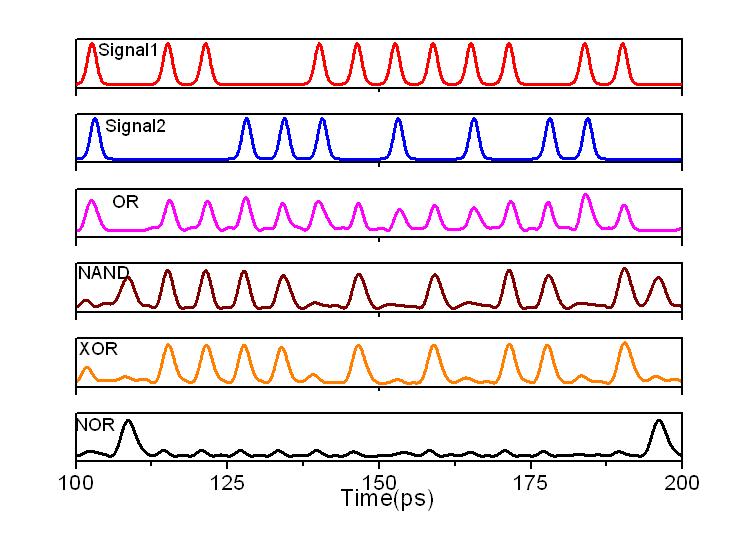
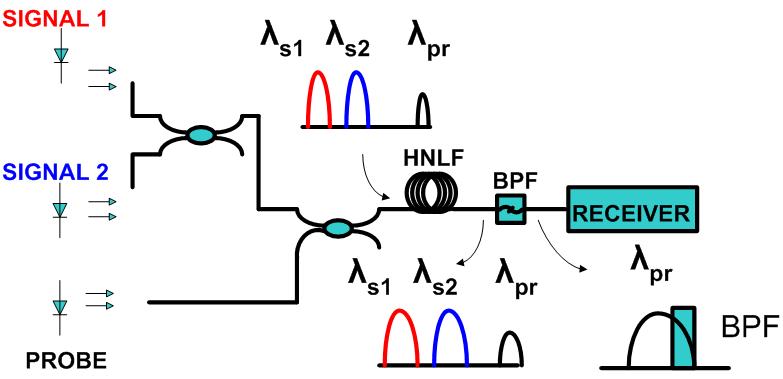 All-optical logic can play an important role in next generation ultra-high speed networks performing optical signal processing functions such as all-optical label swapping, pattern matching, pseudo random number generation and parity checking. A significant step in the development of this technology is the implementation of ultrafast optical logic elements and circuits. Lately, the interest of the scientific community has been focused on the design and implementation of reconfigurable optical gates with the potential to provide many logical operations in a flexible way. Recently, our group proposed a novel and simple scheme to implement a reconfigurable optical logic gate at ultra-fast rates, based on cross-phase modulation (XPM) in a highly non linear fiber (HNLF). The input signals are two RZ-pulse trains and a probe which can be either a continuous wave or a clock signal. The optical gating is accomplished through optical filtering of the spectrally broadened wave. The exact filter's position determines the logical function at the output. The numerical simulations have provided satisfactory results for six logical funcxtions (AND, OR, NOT, NOR, XOR, NAND) at 160Gb/s.
2.3 All-optical intensity differentiation - Application in ultrawideband
signal generation
Currently, the all-optical intensity differentiation of signals is a new
topic that our group is investigating. First- and second-order differentiation
of the optical signal intensity can be implemented by cross-phase modulation
and proper optical filtering. The differentiation of the signal manifests
in the probe wave, and relies on the dependence of the imposed optical
phase on the derivative of the signal wave power. If the input signal consists
of Gaussian pulses, the probe power will obtain the form of ultrawideband
(UWB) monocycle or doublet pulses depending on the order of optical differentiation.
The results exhibit fine correlation between the numerically calculated
pulses and the theoretically expected ones. This activity is gaining the
interest of the research community since, UWB impulse radio is a promising
technology for its applications in short-range, high-capacity wireless
communication systems and sensor networks thanks to advantages such as
high data rate, low power consumption, and immunity to multipath fading.
Especially the UWB over-fiber technology can provide a promising solution
to integrate the local UWB environment into fixed wired networks or wireless
wide-area infrastructures.
BACK TO RESEARCH